
Plastic Pipe Clamp, DIN 3015 Equivalent
Product Description
Plastic pipe clamps comply with industrial standards, including DIN 3015. As fundamental components for industrial pipeline fixing, they are widely used in hydraulic systems, fluid transfer applications, machine tools, and industrial piping systems to secure rigid and flexible hoses and tubes with small outer diameters, such as steel tubes, plastic tubes, and hydraulic oil hoses.
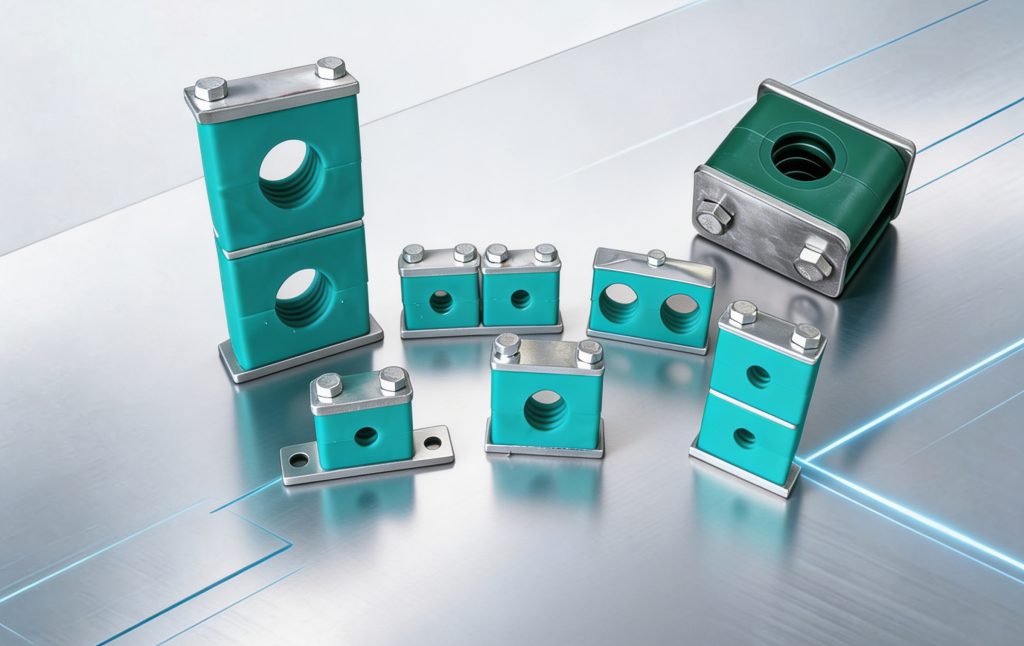
Structure & Features
- Basic Construction: Consists of upper and lower plastic clamp halves, typically made of engineering plastics like nylon or polypropylene. These materials deliver shock absorption, corrosion resistance, and electrical insulation. The clamp set is tightened with metal bolts; some models come with metal mounting rails or bases to fit various installation conditions. The central bore of the clamp matches the outer diameter of the corresponding pipe. Tightening the bolts firmly grips the pipe to prevent vibration and displacement.
Size & Style Variations
- Single-hole and double-hole designs are available for securing one or two pipes, respectively.
- Different bore sizes are offered to accommodate pipes of various outer diameters.
Application Highlights
These pipe clamps offer simple installation and are highly cost-effective. They are extensively adopted for pipeline arrangement in hydraulic machinery, automated production lines, and construction equipment.
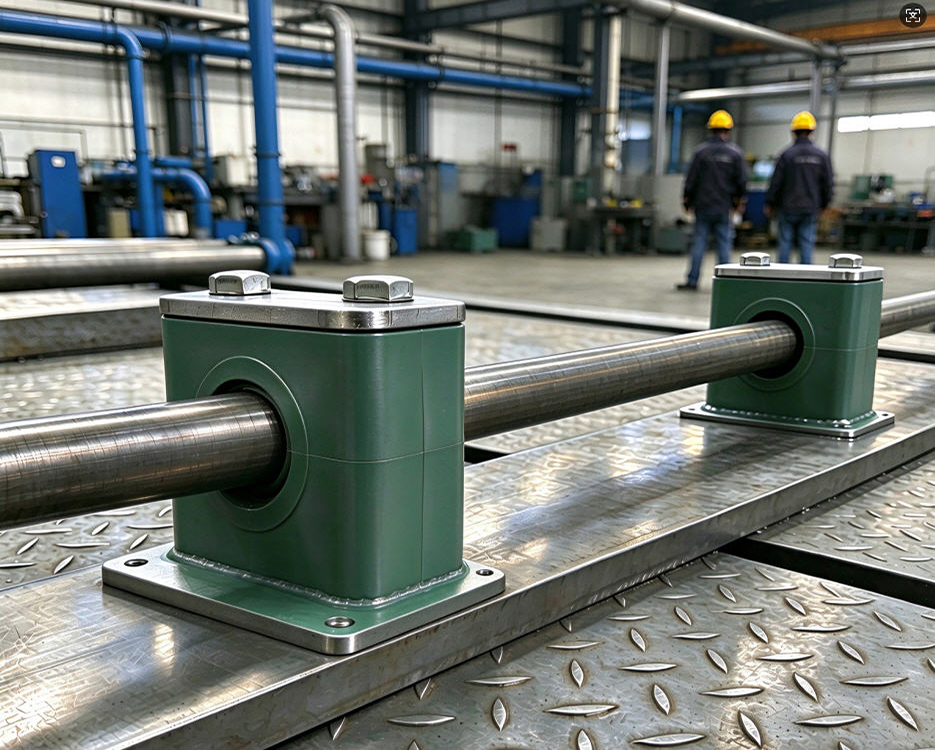
Plastic Pipe Clamp Installation Diagram, DIN 3015 Equivalent
Two Main Types of Mounting Bases
Option A: Mounting with Weld Base (Most Common)
Weld the weld base onto the frame or base separately. The plastic clamp body must be removed before welding. Never weld with the plastic body attached; high temperature will melt and damage the plastic.
Snap the lower half of the tube clamp into the positioning groove of the weld base, align and level it.
Place the hydraulic steel tube in position, then fasten the upper clamp half onto the lower half. Centre both clamp halves so the tube rests within the knurled arc inside the clamp.
Fit the metal cover plate, insert bolts, and tighten them evenly in a diagonal sequence.
✅ Key point:
After tightening, the end faces of the two plastic clamp halves must not press firmly against each other. A small clearance shall be maintained. The tube is held securely by clamping force. Over-tightening will crack the plastic clamp and nullify its vibration-damping capacity.
Option B: C-rail Mounting (Adjustable Position)
The C-section steel rail is pre-fixed to the base by welding or bolting. Slide the rail nut into the rail slot and lock it at the required position.
Secure the lower tube clamp half to the rail nut. Then place the tube, fit the upper clamp half, and tighten the cover plate bolts following the same procedure as above.
Advantage: The tube clamp position can be slid along the rail for adjustment later, no re-drilling or re-welding required.
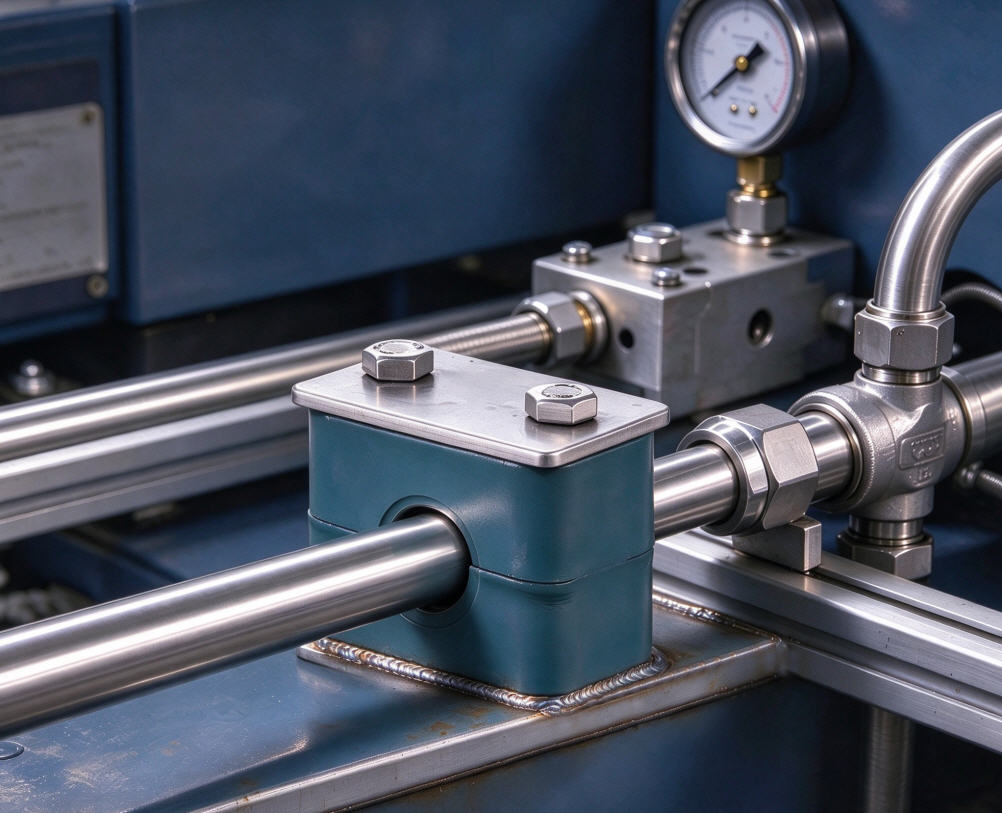


Plastic Pipe Clamp, DIN 3015 Equivalent:Please leave a message